Document processing
Invoices, contracts, forms and PDFs read into structured fields, with low-confidence records routed to a person instead of guessed.
AI automation
We take one repetitive business process, measure what it costs today, and replace the manual steps with a monitored workflow — keeping a person in the loop wherever judgement is required.
Written scope and a fixed estimate within two business days. NDA on request.
The difference
This is the shape of the change we aim for. The actual numbers come from your baseline, not from a generic benchmark.
| Consideration | Manual today | Automated |
|---|---|---|
| Who does the work | A person, every time | A workflow, with a person on exceptions |
| Turnaround | Depends on who is available | Runs on trigger or schedule |
| Consistency | Varies with workload | Same rules applied to every record |
| Audit trail | Scattered across email and chat | One log per record, per step |
| Cost as volume grows | Rises with headcount | Mostly fixed, with per-run costs you can see |
| Failure handling | Discovered later | Alerted and queued for review |
Illustrative comparison — we replace these with measured figures during discovery.
Scope
Automation projects go wrong when they start too wide. Every engagement begins with a measurement and ends with documentation your team can operate.
We count the steps, the handling time and the exception rate as it works today. This is the baseline the automation has to beat.
One step with a clear trigger and a checkable outcome, rather than re-engineering the whole department at once.
The automated path plus a screen for anything the rules cannot resolve, so nothing silently disappears.
For a set period the automation and the manual process both run, and the outputs are compared before anyone is removed from the loop.
Dashboards for volume, failure rate and time saved, plus documentation your team can operate without us.
Where it pays
What we build
Each one is scoped as a workflow with an owner, a failure path and a measurable output.
Invoices, contracts, forms and PDFs read into structured fields, with low-confidence records routed to a person instead of guessed.
Incoming requests classified, prioritised and routed to the right queue with a reason attached.
Records compared across systems, mismatches flagged, and the boring fixes applied with a full change log.
Recurring reports assembled from source systems on a schedule, with the numbers traceable back to their origin.
The step between two tools that a person currently does by copy-paste, replaced with an integration that logs every move.
A review screen for the cases automation should not decide alone, so exceptions stay fast and auditable.
Evidence
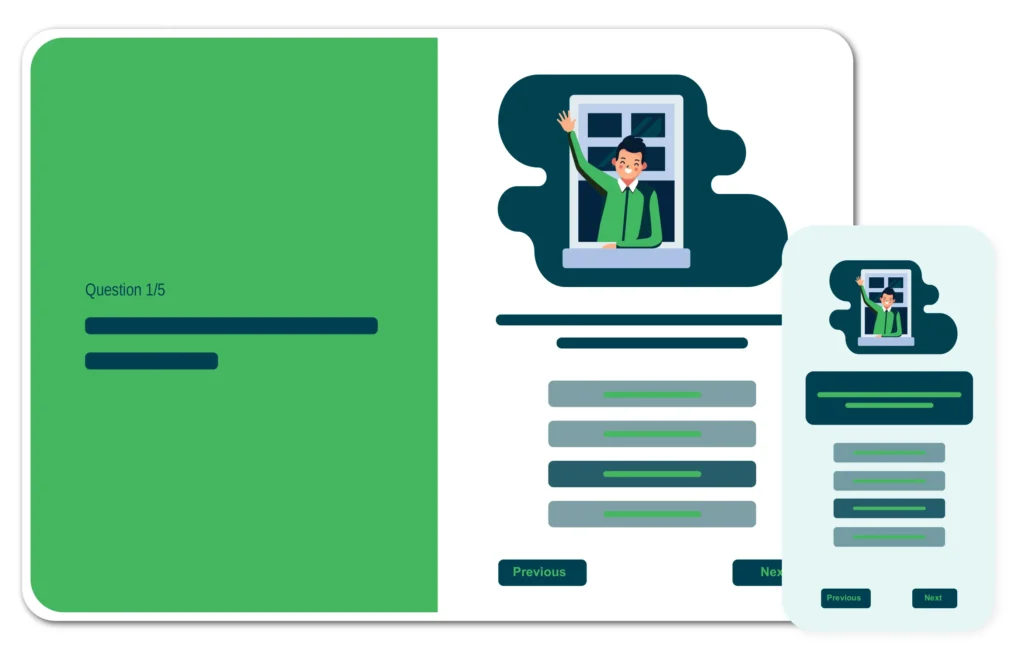
Live products with real users — including a SaaS platform that runs survey workflows for teams.
FAQ
With a process map, not code. We document how the work flows today, where it waits, and which steps are rule-based versus judgement-based. Automating an unclear process just makes the confusion faster.
Both, where each belongs. If the step has deterministic rules, we write deterministic code — it is cheaper, faster and easier to test. AI is used for the parts that involve reading unstructured content or making a judgement call.
Every workflow has an exception path. Low-confidence records, failed validations and rule conflicts go to a review queue with the reason attached, so a person decides instead of the system guessing.
Usually not. We automate between the systems you already run, using their APIs or a supported export path. Replacing core systems is a separate decision with a much bigger budget.
Against the baseline we record in week one: handling time per record, exception rate, volume processed and cost per run. If the numbers do not move, the automation did not work.
Request a quote
Describe the steps, the systems involved and how often it runs. We will map it, flag what is worth automating, and quote the narrow first slice.
No obligation. We will tell you if we are not the right team for the job.
Tell us the goal, platforms and must-have features.
We reply within two business days with scope, approach and a fixed estimate.
Sign an NDA first if you prefer — nothing about your idea is public.